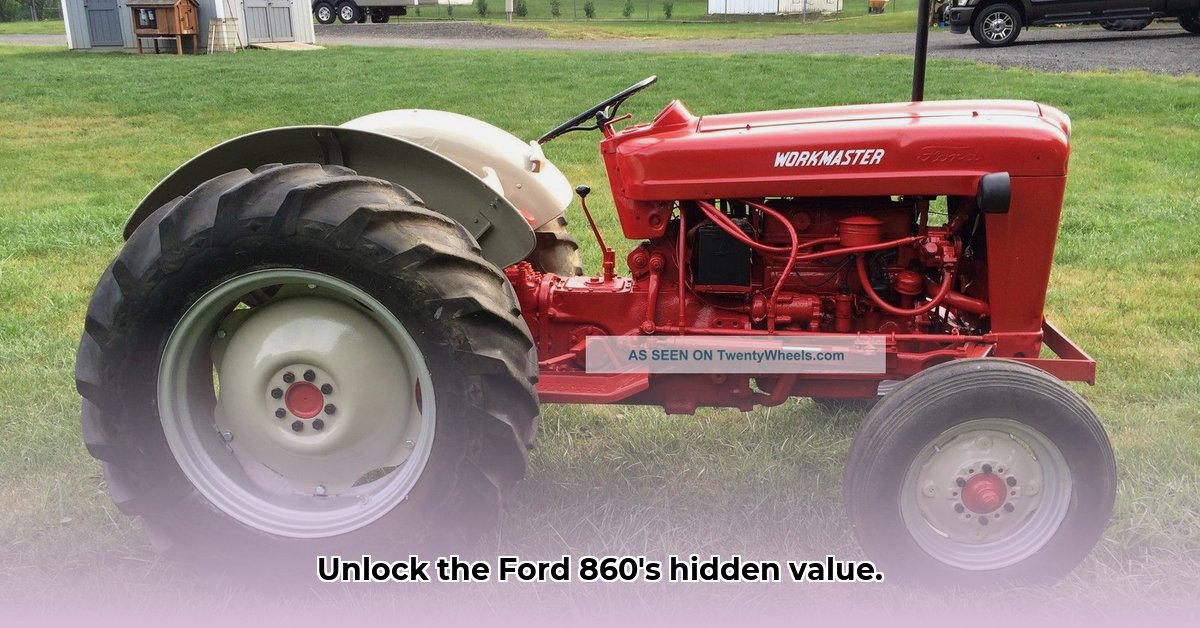
The Ford 860 tractor, a workhorse of the mid-20th century, holds a special place in the hearts of classic tractor enthusiasts. More than just a machine, it's a piece of agricultural history, its value today shaped by rarity, condition, and a powerful dose of nostalgia. This guide explores the Ford 860, examining its history, market value, and what makes it a sought-after collectible. Whether you're a seasoned collector or a curious newcomer, this deep dive will equip you with the knowledge to appreciate and understand this iconic piece of farm machinery. For more information on Ford tractor identification, see this helpful guide: Ford Tractor ID.
Ford 860 Tractor: A Legacy Forged in the Fields
The Ford 860, produced between 1954 and 1957, wasn't just another tractor; it marked a significant step in Ford's foray into the agricultural machinery market. While initially designed as a reliable and relatively affordable workhorse, its enduring appeal has transformed it into a desirable collector's item. But how did a once-common farm implement become a coveted classic? Let's explore the factors that contribute to its current value.
Production Numbers and Their Impact on Value
Production numbers paint a vivid picture of the Ford 860's availability. A mere handful were produced in 1954, a figure that dramatically increased to 116,368 units by 1957. This jump might suggest that later models are more readily available. However, the passage of time has taken its toll. Many Ford 860s have succumbed to the elements and the rigors of agricultural work. This scarcity, particularly of the early models, is a significant driver of their current value. Finding a well-preserved 1954 or 1955 model is a true stroke of luck and commands a premium price.
Determining the Value of Your Ford 860: A Market Overview
Online marketplaces offer a glimpse into the Ford 860's value, revealing a considerable price range. A 1956 model might be listed for around $4,950, while a 1955 model could fetch closer to $3,850, and a 1954 model may even be found at a lower price point—potentially around $3,500. This variation emphasizes the critical role of condition. A tractor's overall condition, the presence of a front loader (which adds considerable value), and its location all significantly impact its market price. A pristine, well-maintained Ford 860 in an ideal location will always command top dollar.
The Investment in Restoration: Time, Effort, and Financial Resources
Restoration is a significant factor influencing a Ford 860's value. It's a labor of love—and a substantial financial commitment. A fully restored tractor, gleaming and fully functional, will undeniably fetch a higher price than one requiring significant work. Potential buyers need to carefully weigh the costs and benefits of restoration. The process itself is often intensely rewarding for many enthusiasts, providing a sense of accomplishment that matches the satisfaction of owning a meticulously restored machine.
Under the Hood: Technical Specifications and Performance
The Ford 860, for its time, offered impressive specifications: a horsepower range of approximately 33 to 44, a five-speed unsynchronized transmission, and a live power takeoff (PTO) – a system that allows the tractor's power to drive other implements. While not the most technologically advanced tractor of its era, its reliability and effectiveness made it a popular choice among farmers. Understanding these technical specifications is crucial for accurately assessing a tractor's authenticity and overall condition, allowing for a more informed comparison with contemporary models from other manufacturers like John Deere or Massey Ferguson.
The Collector's Eye: Understanding the Appeal of Vintage Tractors
The rising interest in classic tractor collecting has elevated the Ford 860's value beyond its purely utilitarian aspects. Owning a piece of agricultural history holds a certain romantic appeal. The Ford 860 represents not only a dependable machine but also a pivotal moment in Ford's expansion into the world of agricultural equipment. The reasons for collecting these tractors are varied: nostalgia, the thrill of restoration, and the simple joy of owning a rare piece of history. These factors all influence the Ford 860’s market value.
Market Outlook: Navigating the Fluctuations
The market for classic tractors, including the Ford 860, is ever-changing. Short-term and long-term influences impact pricing.
| Factor | Short-Term Impact (0-1 year) | Long-Term Impact (3-5 years) |
|---|---|---|
| Parts Availability | Moderate | High |
| Restoration Costs | High | High |
| Market Volatility | Low | Moderate |
| Authenticity Verification | Moderate | Moderate |
Understanding these trends and factors helps serious buyers and sellers navigate the market effectively. The long-term outlook suggests a positive trajectory for the value of well-maintained Ford 860 tractors.
Assessing a Ford 860's Condition: A Step-by-Step Guide
A thorough assessment of a Ford 860's condition is paramount in determining its value. This process involves a detailed examination of various components, including the engine and drivetrain, hydraulic system, body, tires, and accessories.
Engine and Drivetrain: A Vital Assessment
Begin with the engine. Is it the original engine? What's its compression? Low compression is an indicator of wear and potential issues. Next, assess the transmission. Does it shift smoothly? Are there unusual noises (grinding or whining)? Examine the differentials for leaks and smooth operation. Driveshafts and axles should be checked for bending or damage.
Hydraulics and Three-Point Hitch: Functionality Matters
The hydraulic system is critical for operating various implements. Check the hydraulic pump and lines for leaks. Does the system lift and lower smoothly? Test the three-point hitch to ensure proper functionality and weight-bearing capacity.
Body and Sheet Metal: Looking for Signs of Wear
Rust is the enemy of vintage tractors. Examine panels, fenders, and the hood for rust damage—ranging from superficial surface rust to deeper, more structural issues. Document dents and other damage.
Tires and Wheels: Rolling Stock's Condition
Assess tire condition: Are they original? What is their tread depth? Are there signs of significant wear or cracking? Examine wheels and rims for dents, cracks, and rust.
Accessories and Implements: Completeness Adds Value
Original attachments and implements dramatically increase a Ford 860's collectibility. Note the presence of a loader, original lights, and other accessories. A complete tractor with original parts is significantly more valuable.
Researching Market Value: The Final Step
After the physical inspection, research is crucial. Check online auction sites, forums for classic tractor enthusiasts, and relevant databases. Compare recently sold tractors to gain a realistic estimate of market value, ensuring a fair valuation of a specific Ford 860.
The Ford 860 tractor represents more than just a machine; it is a testament to agricultural innovation and a valuable piece of history. Its enduring legacy is a combination of its mechanical prowess and its cultural significance. By understanding its history, value, and the factors that influence its market price, collectors and enthusiasts alike can better appreciate this remarkable piece of farm machinery.